
Blog
Artificial intelligence is altering the way in which people search for information. For a long time, search engine optimization placed a strong emphasis on keywords, search volume, rankings, and matching a user’s query to relevant web pages. Nowadays, search is becoming more conversational, contextual, multimodal, and is increasingly driven by artificial intelligence. This development means that for SEO specialists it is just as important to understand how people form their questions as it is to carry out traditional keyword research.
Google’s AI-powered Search features are already affecting the way users behave. Google states that queries made using AI Mode are much longer than traditional Search queries, the average AI Mode search being about three times longer than a normal one. Moreover, users are now more likely than not to ask questions concerning planning, comparison, recommendations and decision-making rather than just entering short keyword phrases.
This represents a significant change in what people are trying to find.
Rather than searching for a term such as “SEO Specialist Philippines”, a user might ask, “How can I increase the organic traffic to my website when my pages are technically optimised but aren’t bringing in qualified leads?” The second question includes more context, identifies a specific problem, and states a clearer aim. This allows AI-powered search systems to understand the user’s true intent and enable them to find information from a number of sources.
Google’s AI Mode involves a technique called query fan-out, by which a complicated question can be divided into a number of related searches in order to examine various aspects of the subject. As a result, SEO cannot any longer concentrate solely on ranking for a single exact keyword; instead, content must show topical depth, relevance, credibility, and the ability to answer related questions.
It is here that AEO (Answer Engine Optimization) and GEO (Generative Engine Optimization) become more and more relevant.
AEO is concerned with organizing content in such a way that answer engines will be able to understand it and offer useful answers to particular questions; GEO takes up this idea in the context of generative AI environments, where information can be summarized, referenced, or cited as part of an AI-generated response. The aim is not merely to rank a web page but to ensure that its information remains understandable and valuable in the face of changing search experiences.
Traditional SEO is far from vanishing. Matters such as technical SEO, crawlability, internal linking, structured information, page experience, content quality, and authoritative signals still form important foundations. Google has continued to stress the importance of using its AI Search experiences to connect users with websites and original content.
The role of the SEO Specialist is thus growing. Nowadays, SEO involves not just an understanding of how search engines rank web pages, but also of how AI interprets questions, discovers information, summarises sources, and matches users with appropriate websites.
AI is altering the search query, yet it is at the same time opening up new chances for websites which offer original, useful and well-structured information.
The future of SEO goes beyond merely ranking for keywords.
What this is about is becoming a type of source that search engines, answer engines, and AI systems are able to understand, trust, and confidently recommend.
-
SEO Is More Than Rankings: Building Websites Search Engines Can Understand
Over the past ten years there has been a dramatic change in search engine optimization.…
-
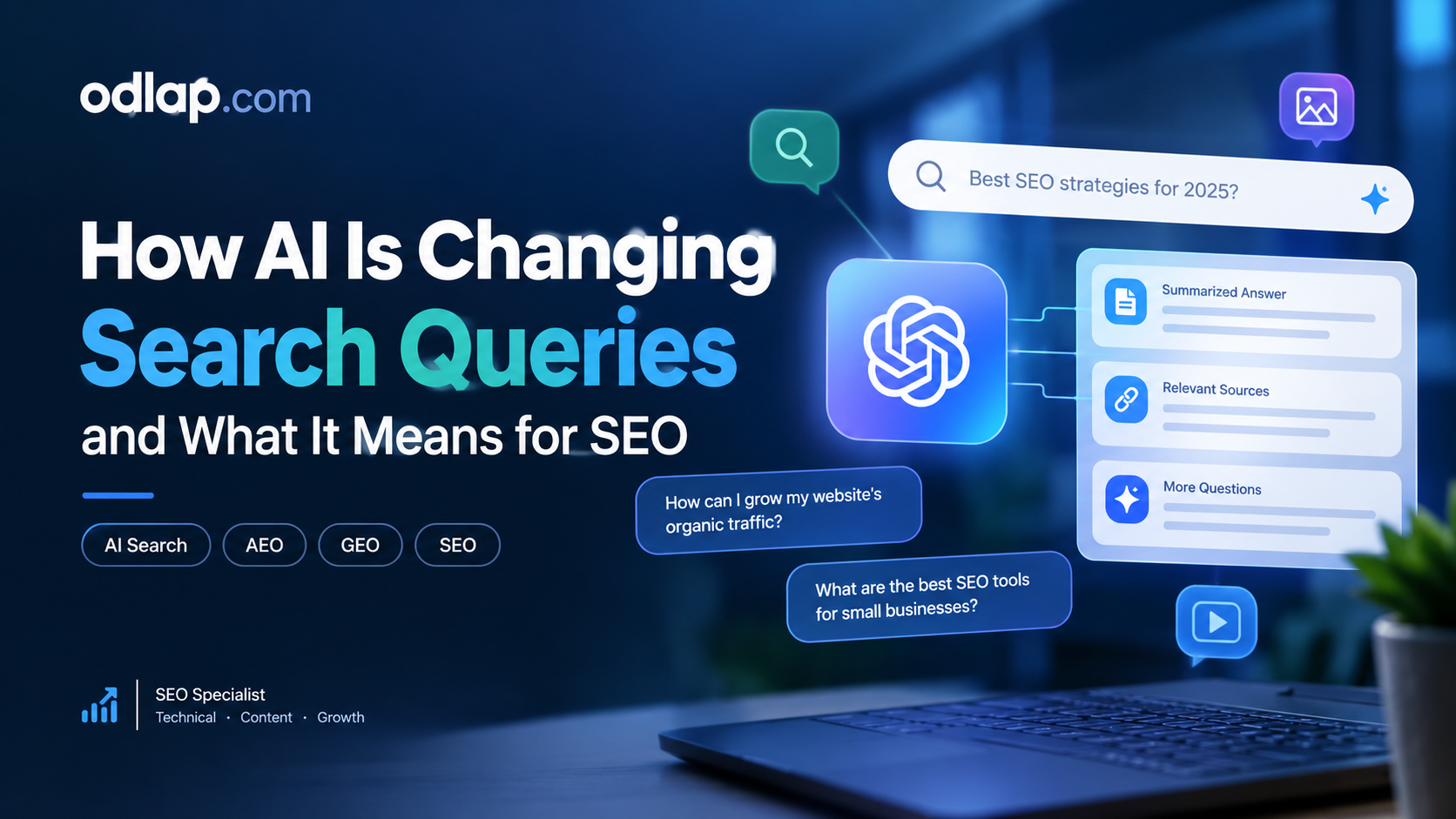
How AI Is Changing Search Queries and What It Means for SEO
Blog Artificial intelligence is altering the way in which people search for information. For a…

Leave a Reply